Koyo Kouoh
Published: December, 2020, Interview with Koyo Kouoh
Marta Gnyp: Let’s start with the unavoidable subject, how are you coping with the Covid-19 pandemic?
Koyo Kouoh: Well, as part of the effort toward curbing the spread of the virus we had to close the museum around March16th. This was about a week before South Africa officially announced a national state of disaster and lockdown. We were still busy trying to gauge how it would affect us. It came unexpectedly; many institutions, arts institutions particularly, were taken by surprise. We had to follow the government stipulations and at that time we were already anticipating that the lockdown would be extended.
MG: The whole world has been taken by surprise and nobody has expected that the impact will be so huge.
KK: It has been very difficult for museums across the globe, especially those who substantially rely on admissions, events, gastronomy and retail as an income stream like we do. This is a concerning issue at Zeitz MOCAA, particularly because we are still a very young museum. We are not financially solid yet. We are still establishing ourselves as an institution, and we were barely coming out of the crisis of the museum’s initial ill inception. Having to close is therefore quite a hard hit.
MG: How are you going to finance the gap? As far as I know you are a partly private partly public museum?
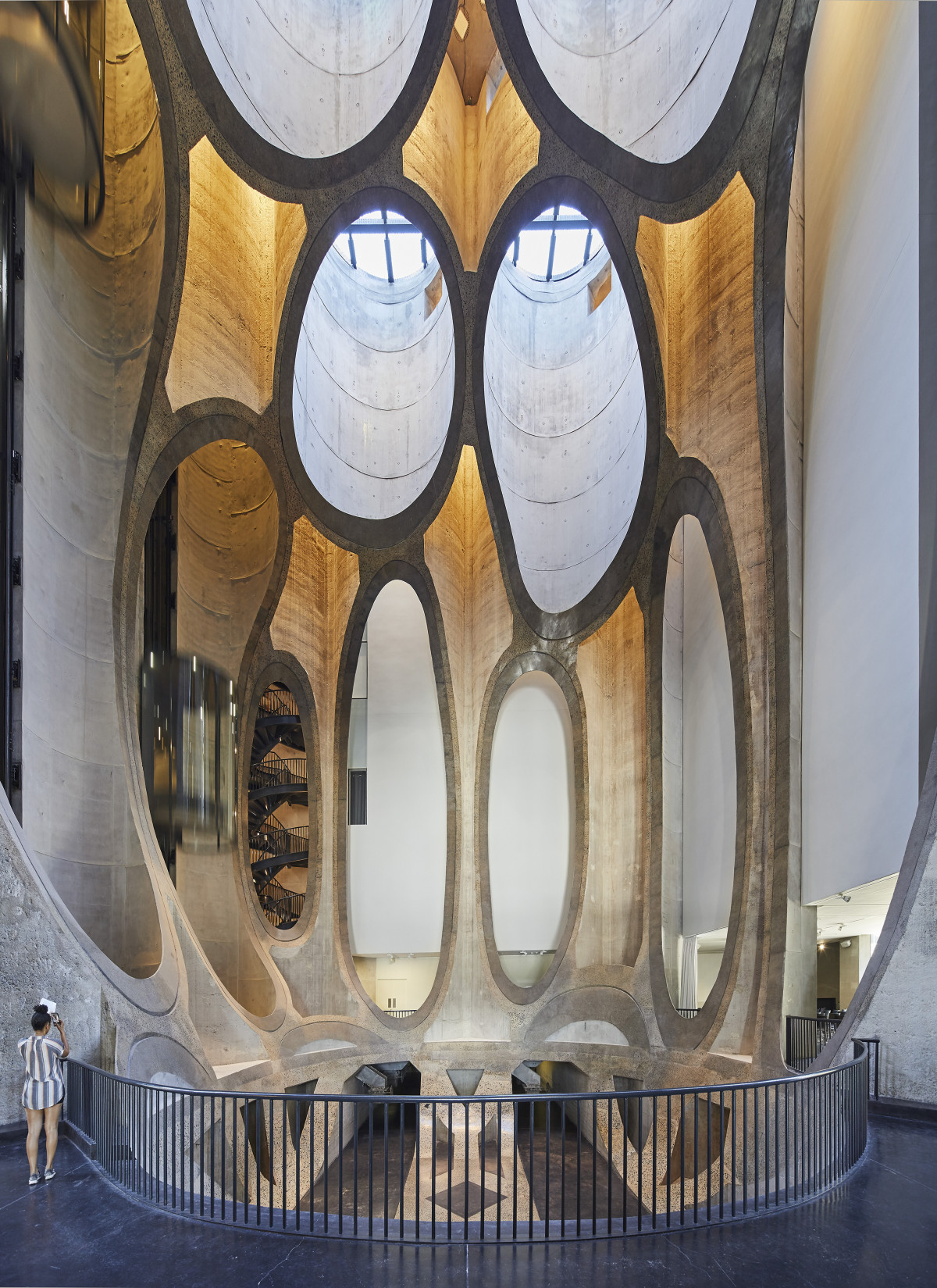
KK: The lingering narrative from previous times regarding the inception of Zeitz MOCAA is still wrong and demands continuous correction. Considering the way the museum was initiated, Zeitz MOCAA is to a large extent – from my perspective – a public museum that is privately operated. This is evidenced in how the V&A Waterfront invested US$35 million towards the renovation of the former grain silo. The V&A Waterfront is a real estate company in charge of regenerating Cape Town’s harbor area where the museum is located. In turn, it is a company established by Growth Point Properties which is funded by the Government Employees Pension Fund. Pension Fund money is put on the capital and real estate markets for the V&A Waterfront, which manages and operates with it. So, indirectly, the finances come from the contributors to the Pension Fund. Like many other pension funds across the globe, they are often used towards investments in the capital and real estate markets, this is nothing unusual. We managed to bridge the financial gap over this time by making enormous sacrifices in regards to reducing salaries but maintaining all jobs. This was very important to me. We also benefited from an increased financial contribution from our trustees. Which is the only way we could survive thus far.
MG: So, one of the initiators was the V&A Waterfront and then came the collection.
KK: The V&A Waterfront put down US$35 million to renovate the grain silo which is on their premises. Zeitz MOCAA is not a private museum built by Jochen Zeitz in Africa, as is generally stated in uninformed narratives. Rather, it’s a partnership between the V&A Waterfront and Jochen Zeitz. The museum carries Zeitz’s name because this is the agreement both partners reached. V&A provided the building and the resources to operate it and Zeitz loaned the art collection to program it. Zeitz did not invest US$35 million to build the museum nor is he bankrolling the operational costs either. We are a hybrid form of something between public, private and corporate, and work with an economic model that reflects the hybridity of such a status.
MG: In order to avoid the confusion, are you thinking about getting rid of the name of Zeitz in the name of the museum?
KK: The general noise focuses too much on details that are most of the times inconsequential. While I fully understand and even agree with most of the criticism raised around the name, I would argue that it’s not necessarily a name that makes or breaks a worthwhile initiative such as Zeitz MOCAA. It is its governance, staff, programmatic output and collaborations that one establishes that provide meaning to the work. My energy thus far is expended in these areas. The name is a more complex matter that is in my opinion the least urgent point to address. I believe that fleshing out the program and heightening curatorial criticality and discursive gravity and programmatic acumen is more urgent. Repositioning the museum as a respectable civic institution in dialogue with its audience and at the service of art and artists is my top priority.
MG: Let us go to you. I’m very curious about how you became a preeminent art curator of contemporary African art, which immediately generates another question: can we speak about contemporary African art in general? I understand that you were born in Cameroon, I read that you speak fluently five languages, French and English is perhaps self-explanatory, but German and Italian are not.
KK: I’m always astonished that people in the West are surprised that Africans speak many different languages. Africa is a continent of thousands and thousands of languages. The very country that I hail from, Cameroon, has at least two hundred and fifty officially recorded languages alone. Naturally, we are brought up speaking at least two or three languages at an early age in the home, or through socialization in our neighborhoods. Then one goes on to school, and learns the colonial languages, English, French, Spanish, Portuguese, etc.
MG: What was your first language? What did you speak at home?
KK: My first language is Douala. Douala is the language of the people I come from in Cameroon, and it’s also the name of the city I was born and raised in. Speaking multiple languages is not an achievement, it’s not extraordinary for an African to speak three, four, five languages. It’s absolutely normal.
MG: It looks like art was not your first choice as profession because you went to Switzerland to study business administration. Did you discover art for yourself in Switzerland?
KK: How does one come to art? Art is about sensitivities. Art is about spirit. It’s about how we connect to the world, how we connect to ourselves. How me make sense of the magic that is life. My interest and appreciation for art began at home in Cameroon. I came to art because I obviously had the sensitivity and interest for it. I had a calling for it, and I developed a passion for it because I happen to know artists and be totally enthralled by some of them.
MG: It was in Douala when you were a young girl?
KK: Is it important for you to locate where it happened?
MG: Yes, because I want to understand whether you come to understanding art from the African or the Western perspective.
KK: Well, I think that my perspective is definitely African. My perspective cannot be anything else because I look at everything from the perspective of my reality of an African black woman. I strongly believe that Art in Euro-America is not necessarily understood in the same way as it is in many African countries. In the West, art may be seen as a very special kind of existence parallel to society at large. However, in many African societies, particularly during the time I was growing up in the 1970s, creative practice is embedded in and is integral to daily life. This means that it may not always match the white cube field that the West established. However, if you absolutely want to trace my chronology, my first interest in creative expression was literature. I think writing is one of the most difficult yet also one of the most engaging and complex expressions of ourselves. From literature, I eventually became interested in visual arts. I was educated in a Jesuit school that really devoted a significant part of the curriculum to creative expression. This meant that students could (it was actually compulsory) select as many forms of artistic expression as one could imagine. So, my engagement with the artistic creativity began there. Additionally, my grandmother used to sew. She was not a professional seamstress, but she had an incredible sense of style. Even though I cannot say that I come from a background where art was enjoyed in the Western sense, I was always exposed to creativity, for you cannot grow up on the continent without being engaged in dance, music, the culinary and the sartorial to the least.
MG: You said something very interesting about this big difference in how we look at art in the Western tradition and the way you perceive art in Africa. Do you expect that in due course there will be also a similar art history created in Africa as we had it in the Western world? We created among others the Renaissance and Baroque and classicism, modernism, post-modernism. Do you think that this kind of art history with periodization and well-defined movements will be created in Africa?
KK: When you place the question of a comparative art history in the future, it suggests that it doesn’t exist already.
MG: No, I’m not saying this. The periodization in the Western world has been an effort of the discipline of art history to construct a meaning and continuity and progress. I’m not suggesting that such a variety of art doesn’t exist in Africa; I’m just curious whether it would be, let’s say, structured and proposed to the big public in comparable categories.
KK: Art history is a very particular discipline. It serves as a very important tool in narrating our existence through artistic practice. I believe that art history, as an academic discipline, has been subject to all the limitations of how Western academia generally, and art history academics in particular, viewed the world. From their perspective, Europe and America were the center of the world and everything outside of this center erroneously became an ethnological, anthropological field of study. This is even more explicit when applied to Africa. This occurred through either lack of knowledge, lack of sensitivity, lack of understanding or purely through the usual methods of academic and institutional racism and exclusion. It’s only maybe in the last thirty years that very strong, interesting, savvy curators and artists have emerged to correct that myopia. Things are changing and have shifted quite considerably in the last fifteen years. With that said, I don’t necessarily think that art history on the African continent must follow the same structures as art history in the West. I believe that even the presumed lack of structuring in terms of periods and eras should be challenged. Because I am tired of the laziness of Western professionals who are too quick to dismiss anything that does not fit into their frames of reference as opposed to surrender to their own ignorance. I just co-edited a publication on this topic: Condition Report on Art History in Africa (2020, Motto Books). The publication is the result of the eponymous symposium organized by RAW Material Company in Dakar in 2018. The book gathers presentations, keynotes and discussions from the symposium as well as specially commissioned essays and dialogues following up on the event. It offers a precise overview of the art history being written today on the continent, its critique, but also what is to come for more and more art historical material is not necessarily generated by the academy but rather by hybrid spaces of knowledge production, which have gained considerable meaning in the intellectual landscape of artistic production in Africa.
MG: Do you think that the restitution debate would play a role in this process?
KK: What is the link between classical artistic production on the continent and contemporary art today? If you look at the entire restitution debate about works looted from the continent, and then you look at that wealth of works that are available, it amounts to multiple art histories. However you structure it or you define it, for me, it doesn’t necessarily matter that much today. It matters of course for academia.
MG: Do you believe that something like African contemporary art exists, taking into account how huge the continent is?
KK: Oh, yes, I am one of those who totally advocate for that expression, and the fact that the terminology remains so controversial has given rise to a healthy climate of debate. It brings attention to art from the continent and it means that people care or have opinions and positions regarding it. There are multiple ways to read particularities; the size or the diversity of the territory does not matter. Rather, it provides a kind of strength and force, a force that one must reckon with. I never think of the continent in a divisive way. Africa has been divided over time by various systems and people who have massively profited from these divisions. I really believe that 21st-century Africans should collectively and efficiently reject that divisive rhetoric. If you look at it in a semantic way, contemporary African art can be defined as any art produced by people from Africa, be them living on the continent or not. Contemporary African art is art produced by artists who identify as African. If you dig a little bit more, and you look at art production from Africa, you can also read that much of it involves practices dedicated to the real, to the immediate, to forms and expressions that tend to serve a specific community or a specific issue, as opposed to art for art’s sake, so to speak. These are fundamental characteristics and I think that this is what makes it stand out in many ways. It is an art production that is hardly self-referential. But, at the same time, I also believe that the complexities of the status of an artist in any given society, and particularly in African societies, are challenging.
MG: What do you mean by that?
KK: Historically on the continent, artistic production was very much an integral part of society; of daily life I might even say. As art objects were extracted or disconnected from communities or from their original environments, into galleries, museums, art centers and collector’s vaults, this made people forget that most of the artistic production on the continent involved practices that were communal. This is specially so for the classical art production that is now the subject of the restitution debate. This category of art was initially embedded in societies, and it was collectively produced most of the time. Today, we are now in a space where artistically we compete more or less on a global scale. I think it’s absolutely right to do so, but I hate that conversation because I always suspect behind it a sense of, “Oh, why would you want to define the art of an entire continent as a single brand?” However, America is just a huge continent as well, isn’t it?
MG: One hardly speaks about American art as an art of a continent. You could speak about European art because there were similar developments in many regions, but still French art is something different than Italian or German art. My question came more out of curiosity, it was not an accusation.
KK: My answer is not specifically addressed to you. It’s just that this pattern of reading comes up all the time.
MG: Because it is not obvious. You have North Africa, which is actually populated by Arab and mostly Islamic people; these are completely different cultures than let’s say the art of the Southern part of Africa. There are differences.
KK: Of course, there are differences. It is as if having an overarching terminology would be antithetical to recognizing and acknowledging plurality and diversity of cultures and communities and multiplicities of schools and regions. If non-Africans are overwhelmed by our abundance, complexities and intricacies and need us to be minced into easily digestible pieces, we should not facilitate that.
MG: The late Okwui Enwezor who was, let’s say, the face of contemporary African art and operated obviously in the same field as you do, said that for him contemporary African art was defined by the tension between the utopias or expectations of the decolonization and the failure, the disappointments, of what happened after that. Would you agree with his statement?
KK: Okwui will come haunt you for reducing him to being the face of contemporary African art. The man was larger than life. However, I don’t know where the statement is taken from, Okwui was an extensive thinker, and it must have been in a larger context that he was saying this. Therefore, I cannot respond to it because it doesn’t really give me the room. Nevertheless, what I would say is that artists, generally, draw from their environments and their socio-cultural realities. They use this as sources of production, for inspiration, as material to work with. I strongly believe that the post-independence period in the 1960s and the 1970s, was an era of an amazing dynamic boom in all fields and all things of life. This included a boom in economy, education, arts, culture, and so on. The disillusionment of broken hopes and promises came quickly in the early 1970s, and very seriously in the early ’80s. T hen in the mid-’80s structural adjustment programs started to be implemented when Bretton Woods institutions, with the complicity of our political leadership, began to mess up the continent. This particular period from the 1980s to present day, which is the temporality frame within which many contemporary African art curators work, including Okwui, saw a lot of upheaval, turmoil and changes. Seen from that perspective, to a certain extent, I can agree with him. However, there are many artists who approach art in a very intrinsic way and produce works that are not embedded in these politics, which is also important and necessary.
MG: Speaking about your broad definition of contemporary African artists, would you consider Marlene Dumas a contemporary African artist? She’s been living in Holland for the last forty years, working with “black” as much as with “white” subjects equally, making work about very universal subjects.
KK: Marlene Dumas is South African of white settler’s ancestry established in South Africa since at least the mid-1500s. Her name traces her back to the French Huguenots who have been completely incorporated in the Afrikaaner cultural sphere. There is no such a thing as a “return” to the Netherlands nor Great Britain that is possible at this point for this community. Therefore, in the true African sense of hospitality where one becomes family after a certain time, I certainly consider her African. The real question would be whether the African Whites of the settlers’ descendants in southern Africa with South Africa and Zimbabwe in the lead consider themselves African or not.
MG: Don’t you think that such a broad definition would make the term possibly shallow? I or the broad public can’t understand the art without knowing profoundly more about its context and if the territory is too big, is it becoming too challenging?
KK: Well, no, I don’t think so. You cannot escape knowledge. The intellectual laziness of people when it comes to Africa is appalling. The expectation is that everything has to be packaged in little easily digestible and easily graspable soundbites. These attitudes have to change. Okay, one would say, “When it’s too big, it becomes shallow.” No. You have to face it. It’s big, it’s complex. You need to learn more. You need to research more. I don’t think that it is my role as a museum professional to feed into that laziness. If you are interested in an artist, you research, you find out. If you’re interested in a territory, you research, you find out. That is what I call genuine interest. Not superficial performative interest like a lot of the art world crowd is prone to. It’s hard work. Get down to it.
MG: That’s exactly my point. You can’t be specialized in contemporary African art because that’s too much if you want to do it profoundly. If you want to understand specific artists, you have to research the specific artists and their context. So, if I would know, let’s say, a lot about artists from Ghana, it doesn’t mean that I can say anything reasonable about artists from South Africa, and so on. If you really understand the context of artists from one specific country, it doesn’t make you a specialist in African Contemporary art.
KK: Well, this applies to anywhere else. I mean it’s the same in Europe or in America or China or in Southeast Asia, in India. India is another good example, it’s a sub-continent, but these questions that are always asked about African art and African artists are never applied to those places. So, there is this continuous sense of mystification. “Oh, it’s too big. It cannot be boiled down to one thing. It’s too complex.” Yes, face it; that’s our reality. If you are really interested in us and respect us, you will embrace it and celebrate it as opposed to complaining about how difficult it is to bring it everything under one hat. Do you understand my point?
MG: Sure, I understand your point. What strikes me is that we cannot discuss – in my opinion – innocent questions without you thinking about power structures.
KK: Absolutely. Nothing is innocent, even innocence is not innocent.
MG: And this is my point: sometimes they are questions that are innocent without imposing any post-colonial power play into it. Sometimes a cigar is simply a cigar. But it looks like if it comes to African art no conversation can be just driven by curiosity because you would always sense the power structure game underneath. This makes it so difficult.
KK: This is what slavery, colonialism, global Euro-American imperialism and myopic African leadership produced. They produced territories and people that are drenched and caught in political power structures. This is the reality. We don’t have the emotional nor intellectual leisure of not reading everything through those power structures, because they are exercised everywhere and all the time without respite. You cannot disconnect from it, because it’s embedded in all structures. A cigar is not just a cigar. If you deconstruct it, you can lay bare all the power structures and exploitation that are rolled into it. Not being conscious about it is white privilege that Africans don’t have. In South Africa, where I’m working from now, you cannot talk about artistic practice, about anything for that matter, without consideration of racial politics because everything is political. The entire history of this country over the past five hundred years is drenched in exploitation, power structures and race issues. So, the art that is produced speaks to that and is embedded in that directly or indirectly. This speaks to the broad spectrum of human reality and human tension that is the space within which lots of artists work. It’s challenging and political on the continent because such is our history, and particularly in a place like South Africa.
MG: Sure.
KK: We can’t afford the luxury of looking at beautiful lilies on a painting without questioning their presumed innocence.
MG: Well, if you refer to Monet and l’art pour l’art, it was born as a reaction to the suffocating political and cultural climate of 19th-century France; each art digests problems of its own social environment. Another question: how do you see the craft in this context? You said that in Africa art is interwoven with many aspects of communal life. Where do you place the traditional craft in Africa?
KK: Well, somehow before art became art, it was craft. Even in the narrative of Western art history, art was craft at some point. I think craft is an amazing field for creative transmission, for creative production, and for creative preservation in terms of skills and techniques and materials and aesthetics. But craft is for me very much design, and begs the question: where is the transition or link from design to art? This is a question that has been answered. Design has a utilitarian purpose whilst being very clearly embedded in the creative expression. Today it has totally different modes of production.
MG: What about spirituality? Again, you said that African art is rooted in the community. In performances there’s a reference to ancestors’ cult in it. In the Western art, we very strictly abandoned the idea of spirituality in art except the concept of the sublime or transcendent. How do you see spirituality in African Art?
KK: I look at it from the perspective of the makers, of the artist before going to any specific art. I strongly believe that creative practice in general is a spiritual activity. Making art draws very largely from a kind of inner spirit. So, for that matter there is spirituality everywhere. Every artist has their own sense of transmitting that; that’s one way of looking at it. If you want to look at it as a form of representation of spirituality, you have a wide range of people and things that you can look at. However, I’m working very closely with an artist whom I’ve been following for the last twenty years and whose work in the last five years has veered to a shamanistic spiritual kind of expression. Through working with her, I’m trying to understand exactly what one wants to get at with spirituality.
MG: As you know, from the perspective of art experience, in the Western art, we have allowed the idea of sublime but expressing religious sentiment in art is considered cheesy nowadays. The veneration of God in art after the Renaissance has become out of the question. With the analytical modernism and post-modernism even the idea of beauty has become very problematic. Since Africa seems to have a completely different take on the spirituality – I’m not a specialist so I can only ask questions – even today people seem to live with ancestors next to the classical monotheistic religions. It looks like the spirituality is much more embedded in daily life there. I was wondering whether this aspect is somehow reflected in African art. Could it be that African contemporary art is more open to spirituality – in production as much as in perception – than Western art?
KK: The artists that I look at, that I work with, don’t really deal with that matter in a representational way. It’s not a field of interest for me in that sense because I am not a religious person, even though of course, like many Africans, I was raised in a strictly religious environment. I rejected that for many reasons, but there is no room here to speak about it. The artists I work with, don’t deal with spirituality in an explicit way. But if you take an artist like Tracey Rose, for instance, whose work has always been embedded in the post-apartheid politics of South Africa, you will see her focus is on a kind of spiritual art form. It involves a continuous spiritual engagement with the cosmos, with energies, with spiritual connections, shamanistic rituals, and so on. If you take to the practice of someone like Issa Samb, with whom I’ve worked for the longest time, his entire courtyard studio was like a sanctuary, so to speak. His practice was embedded in the Lebu cosmogony from Senegal where he came from. Almost every piece, action, installation was a translation of traditional Lebu rituals. So, there is a lot of spirituality in the practice of many artists on the continent, but it’s not necessarily the representation or the illustration of spirituality, which I always think is kind of cheesy and not really interesting. But if one goes to the power that is at the basis of any artist there is a spiritual and cosmic wall or space that they use for their thinking.
So, spirituality in the largest sense is very present. It may not be represented and reproduced because that is not interesting; what is interesting is how you abstract it and how you transform the space from which you work as an artist and how it speaks to a society which is your sounding board.
MG: Very interesting. Let’s then turn to something very graspable and practical. We are now in the middle of the corona crisis; do you think that this would change the art world?
KK: I hope so. But as we know, humans are not the smartest when it comes to making good decisions for our long-term development. There will be, and there must be, drastic changes. I don’t have the talent of predicting the future, unfortunately, but I sense that this pandemic will show us again how interconnected and interdependent we are, and how we are definitely all equal. It shows us, and you were talking about power structures earlier, how the asymmetry of power is damaging to the way the world functions. I hate to say this, the virus broke out in China sometime in November 2020. The world was watching until mid-February more than three thousand people had died in China. The panic broke out when it started hitting Europe and America. That is what I mean with asymmetry of power. The pandemic is a serious threat to all of us everywhere. I believe that it is highlighting the lack of resilience of the global economy. I cannot believe that companies are already laying off people just after four weeks. That means that those companies were not resilient at all. I cannot believe that the health system in countries like Italy, France, the UK, that have such a large international propaganda of being very advanced countries, collapses within a week, and for the United States it is even worse. It’s a full-force trauma. We’re in the 21st century, we have all the tools and access to all sorts of information and images automatically. We are all watching each other, and I make weird analogies in my head all the time.
MG: What kind of analogies do you have in mind?
KK: It reminds me a little bit of the post-World War II situation, where the liberation movements on the continent gained speed, and why? During World War I and World War II, African contingents served in the colonial armies; be it the British army, the French army, you name it. They realized the weaknesses of the countries they were conditioned to look up to as superpowers. Covid-19 is showing us that we are all at the same level; that the economy in its capitalistic neoliberal form is exploitative and not resilient and that the health of Prince Charles has the same value as that of a street vendor in Johannesburg. Even though we do not have the same infrastructure nor tools to protect ourselves, we are definitely in the same storm.
MG: What do you think will happen to the art world?
KK: We are witnessing a demystification process that is taking place. Financial power alone is no more the marker of power and authority. The gravitational energy of what were considered centers is shifting as well. Meaning that size should not matter in the future so much, but rather content and meaningfulness. I further hope for more consideration and inclusivity in institutional narratives for art. I certainly also wish that the bubble many of us live in bursts and we land on our feet to feel the grounds on which we stand anew. Boiled down to the arts sector, I believe that it will be even more difficult to find the resources to maintain art institutions. What I would hope is that there will be a paradigm shift because people will start understanding the role of art. What are we doing in lockdown? Most people are watching a film, or reading a book, or drawing with their kids, or singing and dancing. When we stop chasing the unnecessary, arts and spirituality reclaim their rightful place, so to speak. And this is what I hope will happen, but I am very pessimistic about that. I think it will just be harsher. We are already seeing the kind of sketches and premises of what is ahead of us, and it will make nonprofit organizations, non-commercial kind of endeavors even more difficult.
MG: Are there many collectors on the African continent; do you experience a lot of support from them?
KK: For the museum or in general?
MG: In general.
KK: The collectors’ base on the continent is still rather small. I mean South Africa is something particular in this regard as it has a culture of collecting and some kind of conducive environment for it. For the rest of the continent, many collectors are still finding out for themselves what collecting really means. Many are somewhat understandably still in the phase of establishing collections around their own status and prestige. All fair and legitimate for such a subjective activity. However, the field needs more education, more time for some collectors to understand that they have a key role and a responsibility in the overall ecosystem. It is one thing to collect, which indirectly provides livelihood for artists. But it’s another thing to participate in art institution-building efforts because only civic institutions address, preserve, project and keep art in a way that makes sense for societal progress. Such an understanding is urgently needed for the sector to grow towards a healthy support system that is mutually enriching for now and the future.
MG: Many thanks Koyo.
KK: Thank you and stay safe.